What the job involves
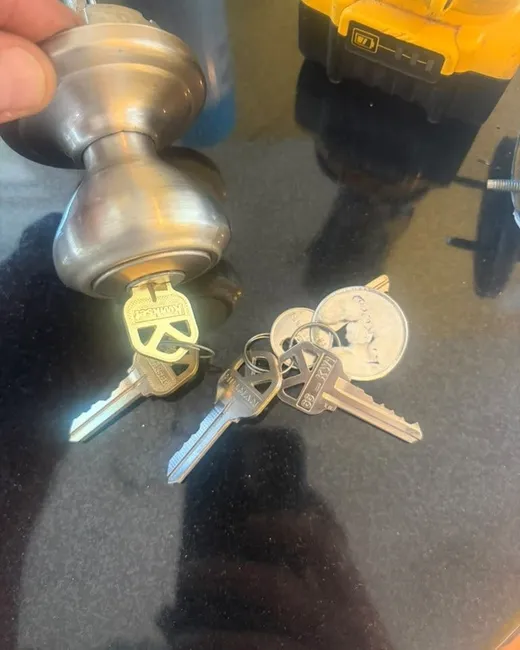
On a residential call the work begins with a visual and mechanical inspection of the door, frame, and lock. That includes checking cylinder play, pin stack condition, cam rotation, and strike-plate alignment. Common tasks are rekeying by removing the cylinder and changing pin sizes, extracting broken key fragments, disassembling and lubricating stuck cylinders, replacing worn or hollow-latch deadbolts, fitting new keyed cylinders or thumbturns, and setting up or resetting electronic keypads or smart-lock modules. Drilling a cylinder happens only when the core is seized or the keyway is destroyed; when possible the goal is to leave the door and hardware in solid, serviceable condition.
02
What tends to cause it
Residential lock problems usually stem from wear, mechanical failure, or installation issues rather than mysterious causes. Repeated key abuse rounds off pin and wafer faces; springs fatigue and fail to return components cleanly; thin, stamped strike plates twist and allow the latch to miss the hole. Wood doors swell or settle, changing gap and alignment so the latch drags; rust, dirt and dried lubricant gum up pins and cams; batteries in electronic locks die or corrosion interrupts contacts. Improper screw lengths or loose mounting screws let hardware shift and accelerate wear, producing intermittent jamming or full failure.
03
Making it go smoothly
You can make a service visit more effective by preparing the door and the space around it. Contain pets and move furniture or debris away from the swing of the door so the lock and frame are fully accessible. If there is a keypad or smart lock, have any user codes and the backup key labeled and available and make the batteries reachable; if a backup key is not present note that when you call. Be ready to show proof of ownership or written permission for the property, point out previous repairs or when the problem started, and have whoever makes decisions present so hardware replacements or rekeying can be agreed and completed in one visit.