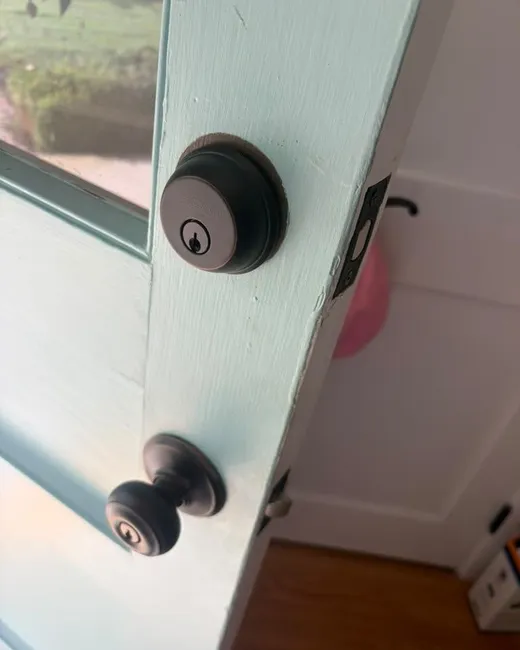
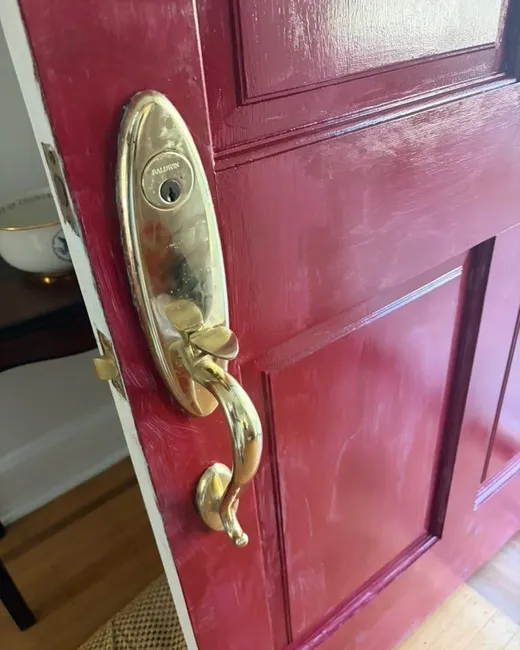
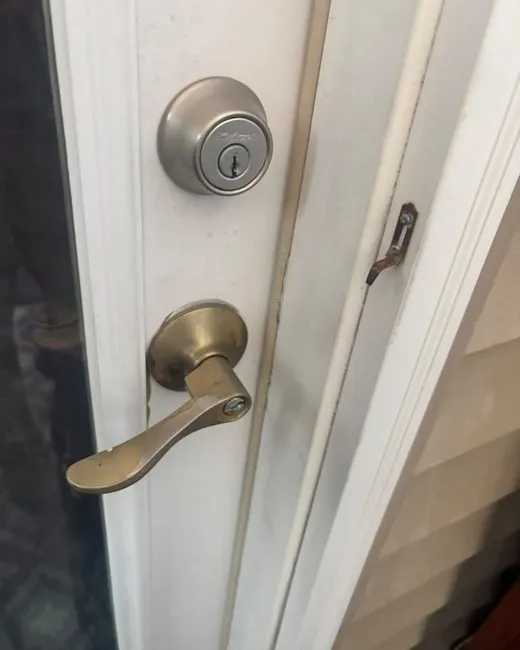
Deadbolts are simple, sturdy locks, and most of them give plenty of warning before they fail. The trouble is that the warnings are easy to get used to. You learn to lift the door a little, or to wiggle the key, and one day the trick stops working.
These are the signs worth acting on.
1. You have to lift, push or pull the door to lock it
This is the most common one. The bolt is no longer lined up with the hole in the strike plate, usually because the door has sagged or swollen, or the house has settled. Every time you lean on the door to lock it, the bolt scrapes the strike and wears. Adjusting the strike plate usually fixes it.
2. The key is getting stiff, or only works one way
A key that drags on the way in, needs jiggling, or only turns in one direction is telling you the cylinder or the key is wearing out. Keys wear too, especially copies made from copies. Left alone, this is how keys snap in locks.
3. The bolt doesn't go all the way out
Lock the door while it is open and watch the bolt. It should slide out fully and smoothly. If it stops short, or needs a second push of the thumbturn, the door is not as secure as it looks, and the bolt may not stay engaged if someone leans on the door.
4. The cylinder or the thumbturn is loose
If the outside cylinder spins in its housing, or the inside trim wobbles, the screws holding the lock together have loosened. A loose lock wears quickly, and a cylinder that moves is easier to attack. Tightening it early often saves the lock.
5. Grinding, clicking or a gritty feel
New noises mean something inside is worn, dirty or broken. Dust and old household oil turn into a paste that makes every part work harder.
What to do about it
- Use a lubricant made for lock cylinders, not a household oil spray, which collects dirt.
- Check whether the bolt lines up with the strike when the door is closed. If it rubs, the strike can be adjusted or reinforced.
- Replace worn keys with a key cut fresh, not a copy of a worn copy.
- If the lock is worn out, replace it before it fails on a day you need it.
Why it's worth doing now
A failing deadbolt usually ends one of two ways: a key snapped in the cylinder, or a door that won't open from the outside. Both are harder, and more stressful, than a planned repair. When we come out for a failing deadbolt, we look at the lock and the way it meets the frame, then repair, rekey or replace it, and leave it turning smoothly.