What the job involves
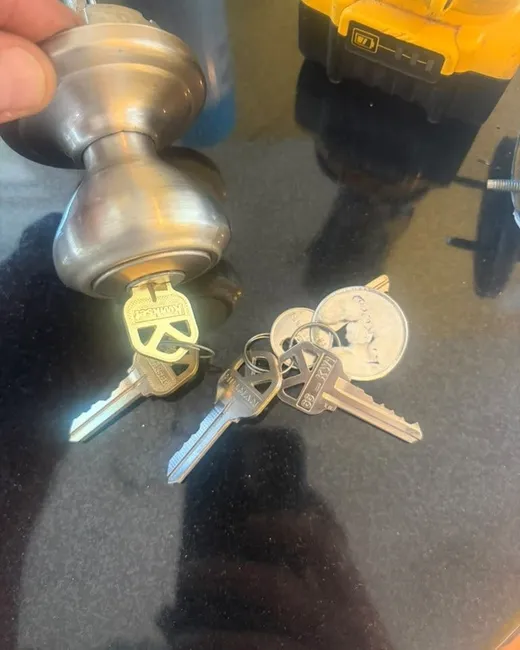
A car lockout job begins with a visual assessment of the vehicle and the lock type. The locksmith works from a fully equipped van and brings tools that include wedges and non-marring entry tools to create a gap at the door, long-reach tools to operate interior lock rods, slim picks for wafer and disc-tumbler systems, and bending tools for broken key retrieval. For cars with transponder or smart keys the work may involve reading the blade profile, decoding the lock by feel, or accessing the ignition cylinder for impressioning. Drilling the cylinder occurs only when other less destructive methods will not release the mechanism.
02
What tends to cause it
Lockouts happen for straightforward mechanical reasons as well as electronic faults. A common failure is a fractured key with a jagged break at the shear line that jams in the cylinder; another is worn key teeth or a bent blade that will not travel the tumblers. Modern vehicles add failure modes: a dead fob battery that leaves the immobilizer active, a jammed latch, or side-impact locks that bind the strike. Environmental causes include debris in the keyway, seized lock linkages from corrosion, or frozen mechanisms in winter that prevent the lock tailpiece from rotating.
03
Making it go smoothly
To make a lockout job run smoothly, have the vehicle identification ready and a photo ID and registration handy to show ownership. Keep everyone, pets included, clear of the work area and away from traffic. Tell the locksmith which door was last used and whether the key is present but broken or entirely absent. If the door glass is lowered even a crack, note that before any manipulations. Clear space around the vehicle and move personal items away from the doors and trunk so access tools can be used without obstruction.