What goes wrong
We handle commercial lock problems businesses see most: mortise cylinders that bind, broken keys stuck in lever locks, panic bars that fail to latch, door closers that no longer control swing, and keypad or card readers that stop communicating. In Pottsgrove we commonly meet wear at high-traffic entrances and perimeter doors where packed hinges and warped strikes let the latch miss. We drive out from Havertown to the site and start by isolating the door and testing the mechanism so we know whether repair, part replacement, or a cylinder swap is the right fix.
02
What the job involves
A typical job begins with a hands-on inspection and functional test. We pick or decode a lock when non-destructive entry is possible, or remove trim to access the cylinder and tailpiece directly. For exit devices we check the bar, internal latching cam and the reinforced strike, and for electric strikes or access-control hardware we trace wiring and test power to the latch. We cut and code keys on site when needed, and we lay out master key work plainly so building staff understand which cylinders change and which remain on existing keys.
03
Good to know
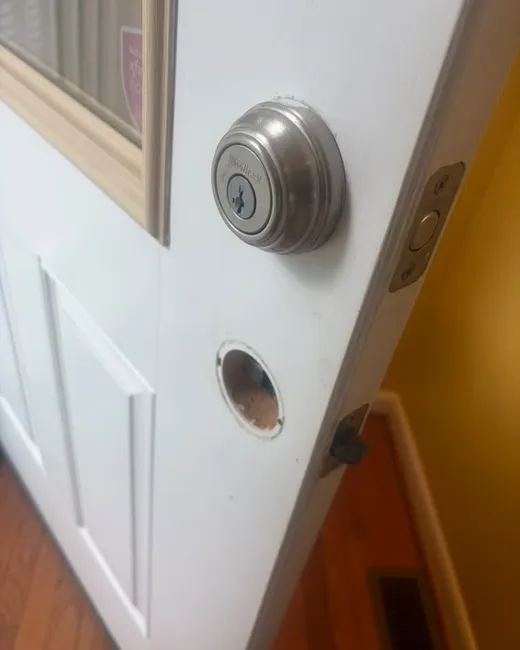
While we work customers should secure the affected area and tell employees to use alternate doors if available; keep people clear of the door swing and any tools or replacement parts. Have someone with authority on site to approve locking changes and to sign for any new cylinders or keys. If the lock is part of an access-control system, a manager should bring keypad codes, keycards, or the log-in credentials for the control panel so we can test programming. Photos of the door and hardware speed diagnosis before we open the case.
04
Worth knowing
Before we arrive gather the current keys, master-key lists if there are multiple levels, and any written records about previous work or part numbers from the hardware. Note the door type: metal, wood, hollow-metal frame, and whether the strike is reinforced or uses a long throw latch; a quick photo of the lock face and strike plate is helpful. If an electronic lock is involved, have power access information ready and a staff member who knows which doors are on that circuit. We work across Delaware County, Chester County, Montgomery County and Philadelphia and we’ll explain exactly what we plan to do once we see the hardware.