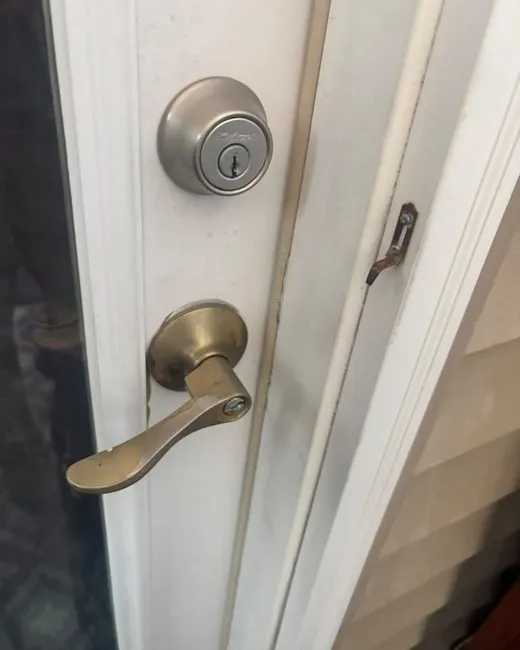
What goes wrong
We work on the kinds of commercial door problems that stop a business cold: exit devices that stick, mortise cylinders that shear off with a broken key, rim locks with worn cam followers, electric strikes that won’t engage, and door closers that leave a door either dragging or slamming. In storefronts, offices and warehouses around Avondale we see misaligned strikes and cut keys wearing out keyways. We travel from Havertown with the tools and parts we commonly need, and we focus on restoring a secure, functioning opening rather than on cosmetics.
02
What the job involves
When we arrive we start with a hands-on assessment of the hardware and hinge geometry, not a canned checklist. We inspect the lock body, cylinder type, bolt throw and strike reinforcement, then remove the trim as needed to clear broken keys, replace a worn cam, or install a new cylinder or rim latch. For access control jobs we test the reader, power supply and wiring at the door, swap out a keypad or door controller module, and proof the electric hardware with the door in service.
03
Good to know
While you’re waiting, direct staff so we can work without blocking customers or employees and secure any area that needs to stay closed. If there’s a building manager or facilities contact who knows the keying plan, have them available on the phone. It helps if someone can hold the door or move stock away from the swing path so we can bench-fit a new strike or adjust a closer. For access control changes make sure the account administrator can provide login credentials or the programming card for the controller.
04
Worth knowing
Have the existing keys, key tags or a copy of the master keying chart ready if you can; knowing which suite uses which cylinder saves time on decisions about rekeying versus replacement. If you have the lock or hardware model numbers, note them, and have a contact who can approve replacements if needed. We carry common cylinders, replacement trims, strike plates and parts in the van so we can complete many fixes on the spot, and we’ll explain the mechanical options and the steps we recommend before we proceed.