What goes wrong
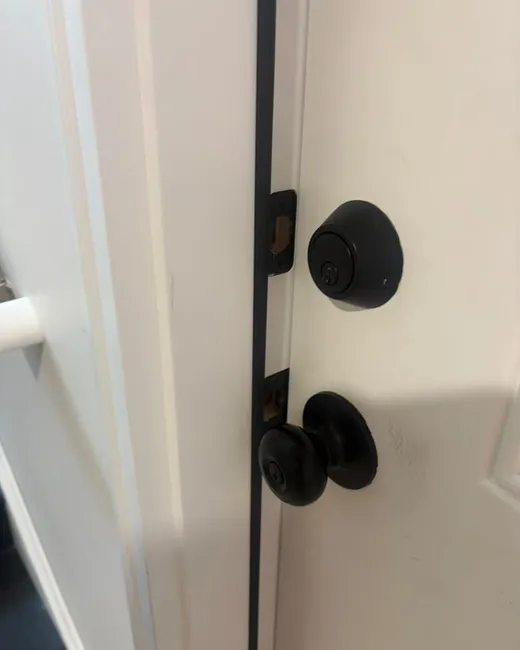
We work on commercial doors and hardware across Overbrook and the surrounding area. Typical failures we see are broken cylinders, sheared keys in mortise locks, latch bolts that won't retract, exit devices with worn cams, and electric strikes that lose power. We drive out from Havertown and carry cylinders, mortise locks, exit devices, keypads, and replacement parts so we can diagnose on site. Every job happens where the lock is; we don't keep a storefront. Our first step is a visual and hands-on inspection to find the worn component or failed mechanism.
02
What the job involves
A common commercial problem is a lock that turns but doesn't retract the bolt, often caused by a broken tailpiece, stripped cam, or misaligned spindle. For exit devices and panic bars we check the linkage, dogging mechanisms, and the condition of the center case. With electric strikes and access control we test the power supply, door position, and the strike face for wear. For door closers we look for leaking fluid, lost spring tension, and failed arms. We identify the failed part and explain the physical repair or replacement options.
03
Good to know
While we work we recommend the business secure the area if the lock compromises access control. For example, lock the interior doors behind staff, post someone at an alternate entrance, or use temporary key control until we finish. If keys are involved, have the master keying information or any keying notes ready and set aside all keys and access cards that belong to the affected lock. If the issue is electronic, have the building's access controller or the person who manages credentials available to confirm which users need access and to help reprogram devices if required.
04
Worth knowing
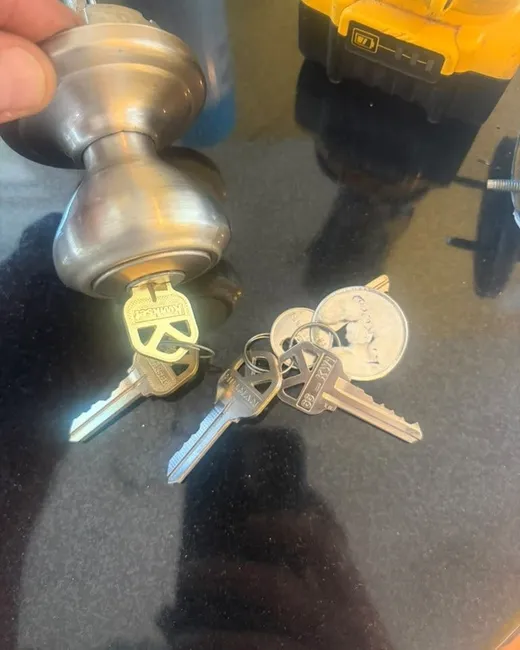
Customers often ask what we actually do on site. We remove trim and covers to inspect spindles, cams, and tailpieces; cut out and extract broken keys; replace worn latches and reinforced strikes; re-pin or replace cylinders; and install or adjust exit devices and closers. For access control and keypads we test wiring, swap modules, and bench-test replacement controllers before installation. If a master key system needs changes we re-pin or replace cylinders to match the new hierarchy. We document what was done and hand over sequences, key tags, and any changed keys to the person who arranged the job.