What goes wrong
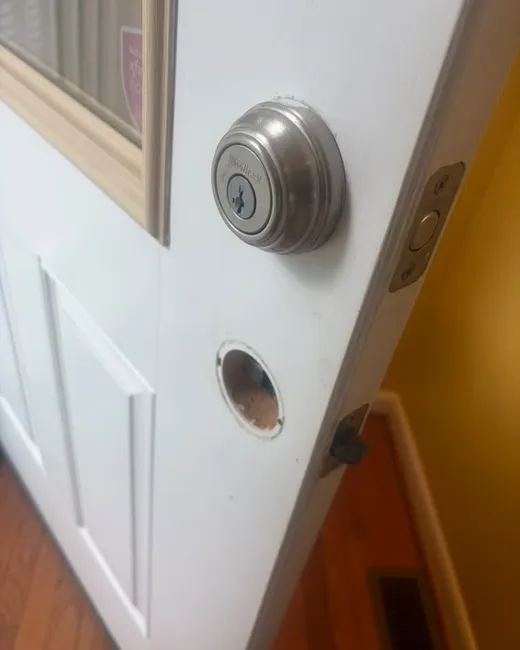
Homes call us because a lock sticks, a key snaps, a deadbolt won't retract, or a door won't latch cleanly. We see swollen wood that pinches a latch, rusted screws that let a strike pull loose, worn cylinder pins that skip, and electronic keypads with dead batteries or failed modules. When a key breaks off in a cylinder we extract the fragment, inspect the plug and housing, and decide whether repair or replacement is the safer step. We work on knob sets, single- and double-cylinder deadbolts, mortise locks and keypad modules.
02
What the job involves
On a typical residential job we take the lock apart at the door, examine parts, and show you the defective piece before replacing it. If a cylinder tumbler stack is damaged from a forced entry we remove it, measure the tailpiece and cam, and fit a new cylinder to the existing hardware where possible. For a mortise case we check the screws and backset, square the faceplate, and, if needed, replace the entire case so the latch and deadbolt align with a reinforced strike.
03
Good to know
If you're locked out, stay calm and keep clear of the hinge side while we work; that gives us room to operate without the risk of fingers in the path of a latch. Have proof of residency or ownership ready and a secondary contact method: a phone number we can use if we need to confirm details. If you can, clear the area around the door and move any pets away so we can use tools safely. We keep the work area tidy and remove metal shavings and used parts when we finish.
04
Worth knowing
We travel to your home from Havertown and bring the tools, cylinders, spindles, strikes and replacement screws needed for most repairs. For electronic or keypad units we check batteries, wiring and module contacts, and we can replace the escutcheon or mounting plate if the old one is damaged. In Philadelphia we commonly rekey and pin cylinders to match a single key, repair broken keys, and upgrade worn latches to longer-throw bolts with reinforced strikes for stronger engagement. We explain what we did and how to care for the hardware afterward.