What goes wrong
Commercial doors at offices, warehouses and retail storefronts fail in predictable ways. Panic bars can stick or shear, mortise locks get jammed with broken key fragments, and cylinder cores wear so keys wobble and don’t turn. We see electrified strikes whose plungers stick, access-control readers that lose communication with the door hardware, and door closers that let a heavy door slam or fail to latch. In Sadsbury Township we work on those exact problems: replacing worn cylinders, repairing exit devices, swapping in a reinforced strike or repositioning the strike on a warped door so latches seat properly.
02
What the job involves
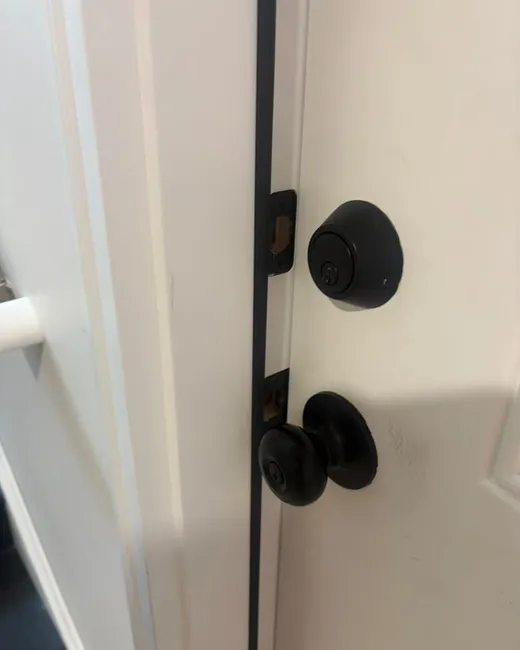
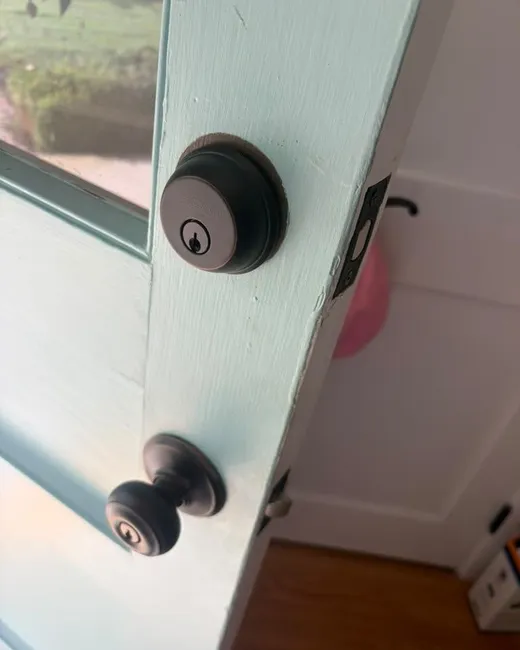
When we come out we start by inspecting the door from the strike to the hinge, noting the lock type, the condition of the frame and whether the hardware is surface-mounted or mortised. We’ll try to preserve existing hardware when sensible, using non-destructive entry methods before cutting new parts. Typical tasks include removing broken keys, rekeying cylinders, cutting working keys, installing new strikes or exit devices, running power or low-voltage to an access controller, and adjusting closers and latches so doors operate reliably. We drive out from Havertown with the van stocked for commercial work.
03
Good to know
While you wait, secure the area to protect staff and inventory and keep people away from a jammed door or exposed lockwork. Don’t try to pry the door open or hammer at the cylinder; that often makes the repair more extensive. Identify an authorized contact who can sign off on any lock changes or new keys, and have any existing keys and keycards ready so we can test replacements. If there are multiple doors on the same key system, tell us which doors are tied together so we can plan rekeying or a master-key setup with the fewest disruptions.
04
Worth knowing
To make the job smoother, have the building’s point of contact available and be prepared to show proof that you can approve changes to locks and keys. Gather what you know about the hardware: brand stamped on the lock, the number on an access-control unit, and any old key blanks or cards. If you have existing keying records or a list of which keys go to which doors, bring that out; if not, we can document a new system on site. We handle commercial lockwork across Chester County and nearby townships, and we’ll leave the doors working reliably before we get back on the road.