What goes wrong
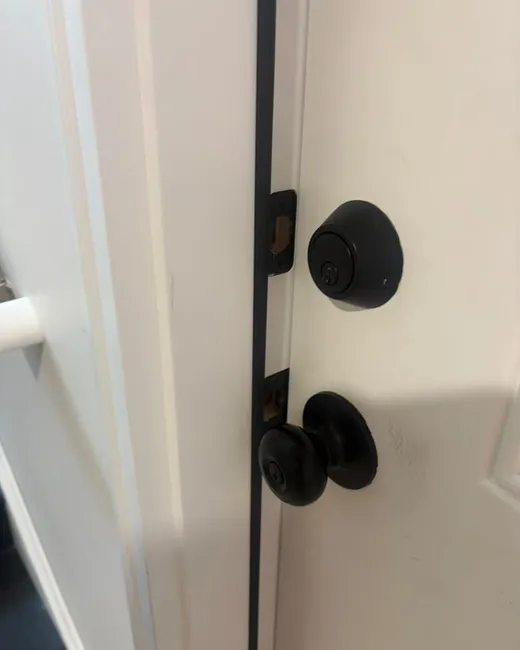
Homes in Glenolden turn up a predictable set of problems: a deadbolt that refuses to lock, a latch that won’t line up with a worn strike, a key that snaps in a mortise cylinder, or a thumbturn stripped of its teeth. We handle those failures by assessing what the hardware actually is (solid forged deadbolts, tubular locks, mortise cases, or multipoint mechanisms) then deciding whether repair, partial replacement, or a full swap is the right move. We explain the parts and the visible wear so you know what we’re doing.
02
What the job involves
When you call we’ll tell you honestly how soon we can come and we drive out from Havertown with a fully stocked van. On arrival we lay out the tools and the parts, protect floors and door trim, and work on the lock in place; sometimes that means removing the trim and faceplate to inspect the bolt and the strike, sometimes it means taking the cylinder out to pick or to extract a broken key. We always test the bolt throw and the latch engagement before we finish.
03
Good to know
While you wait, clear a small area near the door and have your key rings and any installation instructions or previous lock hardware handy; if you have a spare key, bring it out so we can compare cuts. If the door has security hardware like a reinforced strike, chain, or an auxiliary deadlatch, point that out; those details affect the work. Stay nearby if you can so we can ask about access, the door swing, and the lock’s recent history: the last time it was serviced, frozen, or slammed.
04
Worth knowing
We do a lot of lockout work, rekeying, fitting new cylinders, and upgrading strikes and reinforcement plates. For rekeying we remove the cylinder, swap pins and test a sample key to make sure only the supplied key operates the lock. For replacements we match the trim and bore size and check the backset so the new hardware fits cleanly. If you live in Glenolden or over toward Folcroft we’ll do the same practical inspection and tell you what parts are needed before we start.